

Nano Silver (NSMS™ 20ppm): The Science, History & Modern Applications
The Complete Guide to Nano Silver Technology and Daily Antimicrobial Protection
What is Nano Silver?
Nano Silver refers to ultra-fine silver particles measured in nanometres (nm), where 1 nanometre equals one billionth of a metre.
For comparison:
- Human hair ≈ 80,000–100,000 nm wide
- Red blood cell ≈ 7,000 nm
- Typical engineered nano silver ≈ 1–100 nm
Because of their microscopic size, nano silver particles possess an extremely large surface area compared to ordinary silver, allowing greater interaction with microorganisms while using only a very small amount of silver.
Modern nano silver products generally contain either:
- Silver nanoparticles (Ag⁰)
- Silver ions (Ag⁺)
- A combination of both
The antimicrobial activity is primarily associated with the release of silver ions (Ag⁺), which interact with microbial cells.
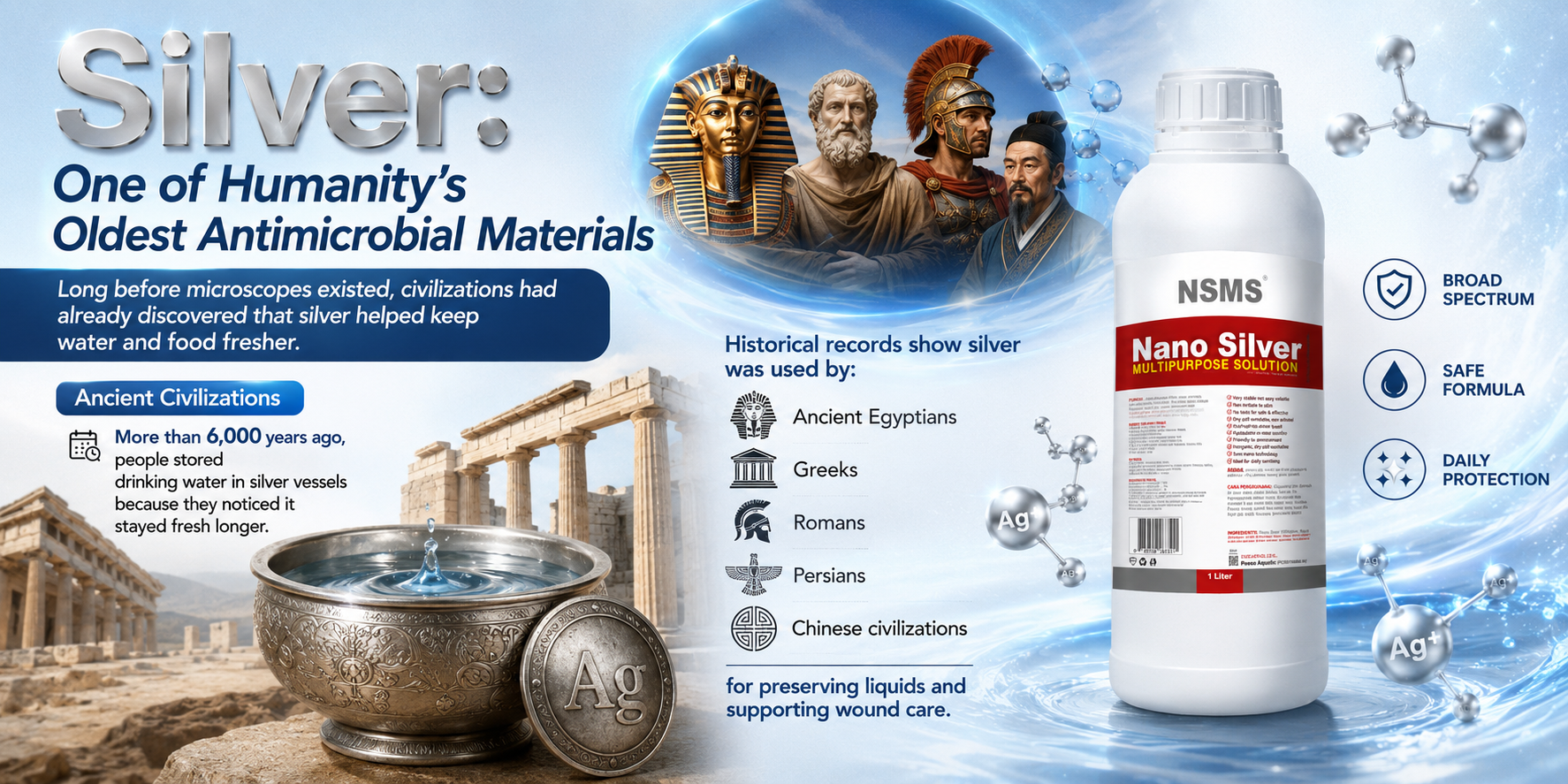
Silver: One of Humanity's Oldest Antimicrobial Materials
Long before microscopes existed, civilizations had already discovered that silver helped keep water and food fresher.
Ancient Civilizations
More than 6,000 years ago, people stored drinking water in silver vessels because they noticed it stayed fresh longer.
Historical records show silver was used by:
- Ancient Egyptians
- Greeks
- Romans
- Persians
- Chinese civilizations
for preserving liquids and supporting wound care.
1800s – Scientific Discovery
During the 19th century, scientists discovered that silver possessed antimicrobial activity.
Silver nitrate soon became widely used in medicine for:
- wound cleansing
- ulcer management
- surgical antisepsis
- newborn eye protection
This marked the beginning of scientific silver-based medicine.
1889 – The Birth of Colloidal Silver
A major milestone occurred in 1889.
Chemist M. C. Lea successfully synthesized one of the earliest documented laboratory silver colloids using citrate stabilization.
Modern analyses describe these particles as being approximately 10 nm, making this one of the earliest examples of what we would today recognise as nanoscale silver.
1920s – Medical Acceptance
By the early 20th century, colloidal silver products were accepted for certain medical applications, particularly topical wound management.
Silver became one of the most important antimicrobial agents available before antibiotics became widespread.
1940s – Antibiotics Changed Medicine
The discovery of penicillin dramatically reduced the use of silver.
Antibiotics became the preferred treatment for bacterial infections, and many silver preparations gradually disappeared from routine medical practice.
1960s – Silver Returns
Silver returned to hospitals through burn care.
Medical professionals began using:
- silver nitrate
- silver sulfadiazine creams
to help reduce microbial contamination in burn wounds.
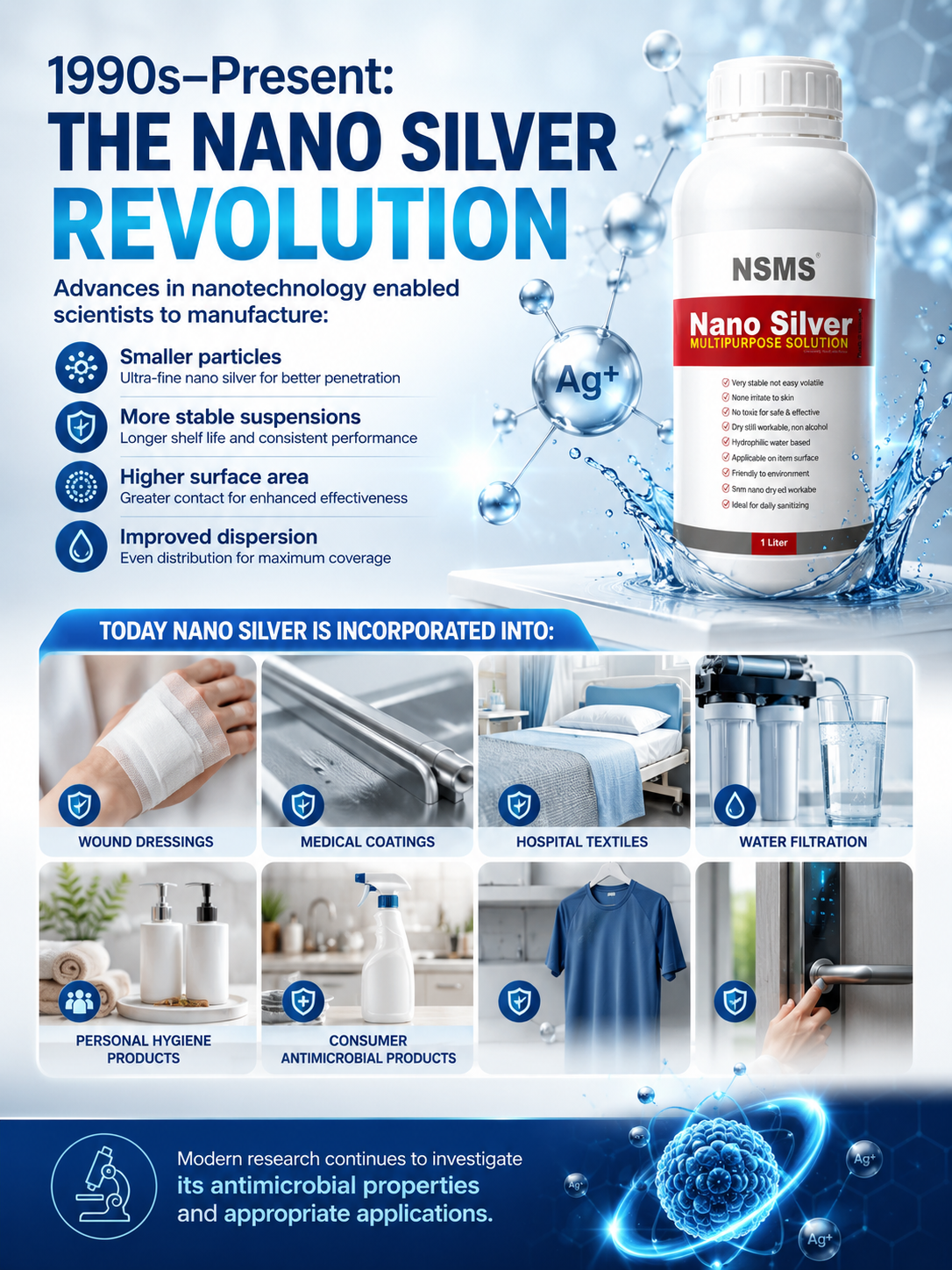
1990s–Present: The Nano Silver Revolution
Advances in nanotechnology enabled scientists to manufacture:
- smaller particles
- more stable suspensions
- higher surface area
- improved dispersion
Today nano silver is incorporated into:
- wound dressings
- medical coatings
- hospital textiles
- water filtration
- personal hygiene products
- consumer antimicrobial products
Modern research continues to investigate its antimicrobial properties and appropriate applications.
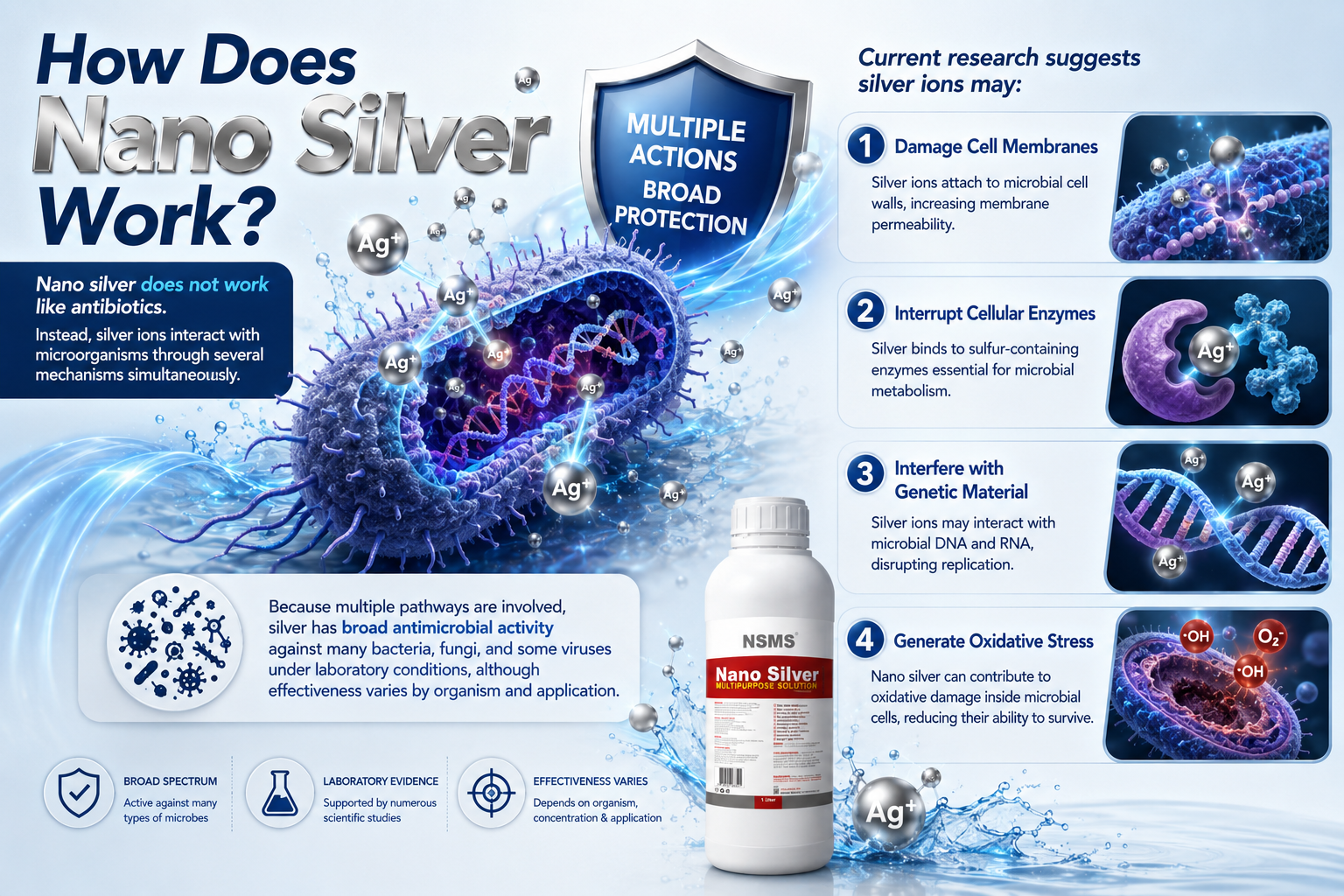
How Does Nano Silver Work?
Nano silver does not work like antibiotics.
Instead, silver ions interact with microorganisms through several mechanisms simultaneously.
Current research suggests silver ions may:
1. Damage Cell Membranes
Silver ions attach to microbial cell walls, increasing membrane permeability.
2. Interrupt Cellular Enzymes
Silver binds to sulfur-containing enzymes essential for microbial metabolism.
3. Interfere with Genetic Material
Silver ions may interact with microbial DNA and RNA, disrupting replication.
4. Generate Oxidative Stress
Nano silver can contribute to oxidative damage inside microbial cells, reducing their ability to survive.
Because multiple pathways are involved, silver has broad antimicrobial activity against many bacteria, fungi, and some viruses under laboratory conditions, although effectiveness varies by organism and application.
Why Particle Size Matters
Smaller particles generally provide:
- greater surface area
- more efficient ion release
- better dispersion
- improved stability
However, particle size alone does not determine quality.
Performance also depends on:
- purity
- manufacturing process
- stability
- concentration
- suspension quality
- storage conditions
What Does 20ppm Mean?
PPM = Parts Per Million
20ppm means:
20 milligrams of silver per litre of solution.
A 20ppm concentration is commonly used in consumer nano silver products intended for topical hygiene applications because it balances antimicrobial activity with practical formulation needs.
Higher ppm does not automatically mean a better product; stability, particle characteristics, and appropriate use are also important.
What Makes NSMS™ 20ppm Different?
NSMS™ 20ppm is designed as a stable nano silver antimicrobial solution for external hygiene and routine care.
Key characteristics include:
- Hydrophilic (water-based)
- Alcohol-free
- Non-oily
- Fast drying
- Easy spray application
- Stable nano silver dispersion
- Suitable for routine hygiene use on appropriate external surfaces according to product directions
How NSMS™ 20ppm Helps
When used as directed, NSMS™ 20ppm helps support everyday hygiene by:
- helping reduce microbial contamination on treated external surfaces
- supporting cleanliness in daily care routines
- providing broad-spectrum antimicrobial action associated with silver ions
- leaving no sticky or oily residue
- being convenient for routine external application
Avoid claiming that it treats, cures, or prevents diseases unless supported by regulatory approval in your market.
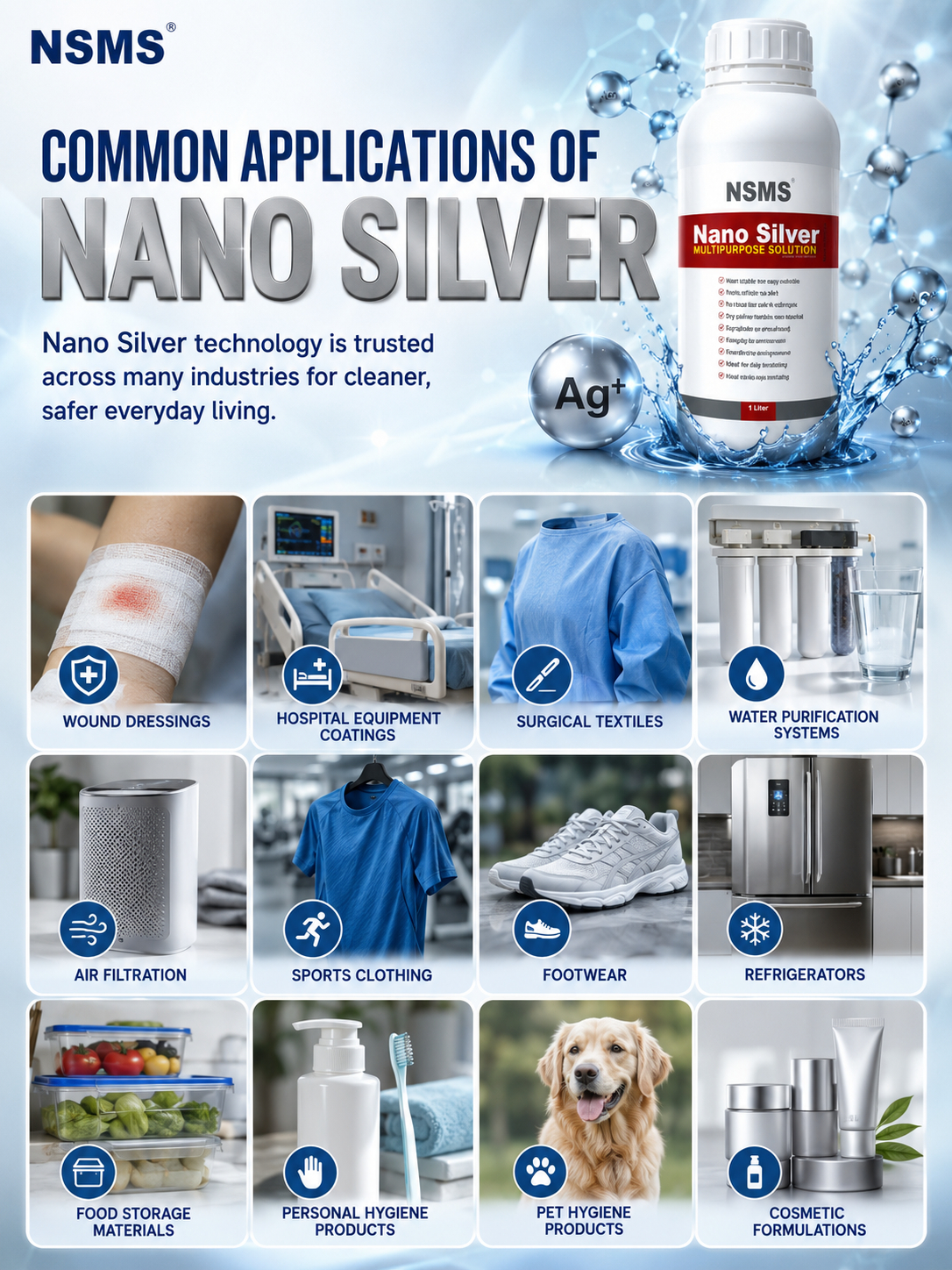
Common Applications of Nano Silver
Modern nano silver technology is widely used in:
- wound dressings
- hospital equipment coatings
- surgical textiles
- water purification systems
- air filtration
- sports clothing
- footwear
- refrigerators
- food storage materials
- personal hygiene products
- pet hygiene products
- cosmetic formulations
Is Nano Silver Safe?
Safety depends on several factors, including:
- concentration
- formulation
- route of exposure
- duration of use
- intended application
Medical literature supports the use of silver-containing materials in many topical healthcare products, particularly wound dressings. However, chronic ingestion of silver preparations can lead to argyria (a permanent blue-grey skin discoloration), and colloidal silver products are not approved as medicines or dietary supplements in many jurisdictions. Products should always be used according to their intended purpose and local regulatory guidance.
Frequently Asked Questions (FAQ)
Is nano silver the same as ordinary silver?
No. Nano silver consists of particles measured in nanometres, giving it a much larger surface area than bulk silver.
Is 20ppm stronger than 10ppm?
A higher concentration means more silver per litre, but overall performance also depends on particle size, stability, ion release, and formulation quality.
Why is nano silver popular today?
Interest has grown because of advances in nanotechnology and the need for effective antimicrobial materials in healthcare, hygiene, and consumer products.
Is nano silver an antibiotic?
No. Nano silver works differently from antibiotics by releasing silver ions that interact with microorganisms through multiple mechanisms.
Conclusion
Silver has been trusted for thousands of years, making it one of the oldest known antimicrobial materials in human history. From ancient civilizations preserving drinking water to today's advanced nanotechnology, silver continues to play an important role in modern hygiene and healthcare materials.
NSMS™ 20ppm builds on this long scientific heritage by combining stable nano silver technology with a convenient, water-based formulation designed to support everyday external hygiene. Used responsibly and according to its intended purpose, it offers a practical way to incorporate the well-established antimicrobial properties of silver into daily care routines while remaining aligned with modern scientific understanding and regulatory expectations.